Six months after our interview with COVER CEO Motoaki Tanigo in March, the September 7 edition of “hololive Next” announced a series of initiatives leading up to hololive production’s 10th anniversary, including plans to unify regional and group branches under a single umbrella: “hololive.”
What will happen to everything that talents and fans have built together as names and the way we deliver content continue to change? CEO Tanigo explains that there is no intention to erase the past with this decision, but instead to carry our history forward as we look forward to an even brighter future. Reflecting on the feedback received after the announcement, he discussed the thought processes behind the unification, the future of talent debuts, the challenge that is hololive DEV_IS, and gave a message to everyone who has supported hololive Indonesia and hololive English thus far.
Why Unify hololive Now?
—At “hololive Next” on September 7, you announced plans to consolidate regional and group branches under the one umbrella “hololive”. Could you begin by explaining the thinking behind this decision?
We received a tremendous amount of feedback following this announcement, with some people expressing excitement, while others shared concerns, sadness, or strong criticism.
hololive began in Japan and has subsequently expanded by establishing groups for Indonesia and English-speaking regions, delivering content rooted in each region and language. Beyond language-based groups, we also launched DEV_IS around the themes of “challenge” and “growth,” using the unit format to explore new ways of sharing hololive with the world. It is no secret that the most important foundations of hololive today were created by the talents and fans as they cultivated our amazing community together.
At the same time, as our activities have grown in scale, the divisions between groups began to create barriers of their own. Strategies for talent activities, how we deliver content, opportunities for talents to work together on projects, and the company’s production and operational expertise have all tended to remain within each group’s domain.
Our mission statement is “Together, Let’s Create Culture Loved by All,” which also continues with the phrase “transcending age and nationality,” because we believe that is the only way to create a culture loved across the globe. As we look toward what comes next for hololive, we felt that it was necessary to bring our VTubers to a wider audience, beyond the confines of regions and groups.
To all of you, and to us as well, hololive, hololive Indonesia, hololive English, and hololive DEV_IS are all simply hololive. This is not about one group being absorbed into another, but rather bringing everything and everyone together and starting anew as one hololive. One that could, in a sense, be described as something new. That is the decision behind this unification.
—Some people are concerned that changing names and labels may also change what these groups have represented until now.
That is something we should have explained more carefully, and one of the points I wanted to address through this interview. The names and the way we share information will change, but the individuality of each talent and everything they have built through their activities will not be reset. The same is true of the culture and connections that fans have nurtured.
This unification is not intended to erase the past or diminish what already exists. It is about carrying forward everything we have created as we look to a brighter future. We want to extend the expertise and range of support developed through our operations across hololive as a whole, creating more possibilities for each talent’s future activities.
That is the principle we want to establish as our starting point.

A New Approach to Debuts
—The new hololive unit “ASOBI★MAWARI-TAI!” is also preparing to debut. Many people have asked which “generation” the unit will belong to.
This is another point I would like to address clearly.
Going forward, we will continue introducing new debuts as “units,” rather than referring to them as the next generation.
This was not a decision made in conjunction with the current unification. Since the debuts of Secret Society holoX and holoh3ro, all new talents have debuted as part of units.
—Why did you choose that approach?
Each person has a distinct entry point into the world of hololive. Regardless of when, where, how, and why they found hololive, that entry point shapes their perception of hololive, and they are able to build upon their original experience, discovering more and more ways to enjoy it. We aim to deliver that kind of journey.
Considering the long-term future of the production, we began to feel that having a long sequence of numbered generations might give prospective fans the impression that they need to begin at zero and follow everything in order, which meant that we ourselves would be narrowing down the entry points for people to fall in love with hololive.
When talents debut under a unit name, the point of comparison becomes not “How long have you known hololive?” but “Which world and concepts do you resonate with?”.
For that reason, we do not plan to continue labeling future units as the 7th, 8th, or 9th Generations.
Of course, this does not mean changing the familiar names of existing generations. Nor does it change the way new generations carry forward what their senpais have built.
For example, Secret Society holoX, ReGLOSS, and FLOW GLOW form a continuing lineage of Japanese-speaking units, and ASOBI★MAWARI-TAI! will join them as the newest junior unit.
These new members are not appearing out of nowhere. They are joining a hololive forged by their predecessors over the past nine years, so in that sense, future debuts are a continuation of everything that has come before.
What the DEV_IS Challenge Has Created
—As part of the unification, the DEV_IS framework will also be brought under hololive.
As I mentioned earlier, DEV_IS was created around the themes of taking on challenges and growth. It has allowed us to explore new ways of reaching audiences through the unit format. Many aspects were new for the company, and there were certainly areas where we needed to improve, both operationally and in how we presented these activities. Even so, with fans’ support and the efforts of many others, we have managed to come this far.
Above all, we have been fortunate to work with talents of extraordinary individuality and appeal. Each one has opened new paths for hololive and demonstrated qualities and potential that exceeded anything the company had imagined. Their achievements have continually amazed and inspired us.
We also believe DEV_IS created a new entry point for people who had never encountered hololive before. The unit format lowered the barrier to entry and served as a catalyst for many fans to get to know hololive. That was possible because the DEV_IS framework existed, and the talents brought it to life.
By taking on the challenge of a clearly defined concept, we also learned how to grow alongside the people supporting us: how to create content, help audiences discover it, and give fans meaningful ways to show their support. We strongly believe that everything built through DEV_IS will become part of the foundation for the next chapter of hololive.
—Does this unification mean that this challenge is coming to an end?
Quite the opposite. We are unifying these groups to help the talents, and the potential of everything they have taken on, grow even further.
DEV_IS was undoubtedly a major undertaking for us, but we won’t forget its significance.
The official YouTube channels for each unit will continue to operate. The expertise we have developed in managing units through DEV_IS will also be used to support their activities.
We want each unit and its members to retain their unique appeal while aspiring to even greater stages as part of hololive. We see this as a step toward making that possible.
The lessons learned through unit management may also be applied to future debuts and, where appropriate, to talents who are already active. A major goal is to ensure that what we learned through DEV_IS does not remain confined within that framework, but benefits hololive as a whole.
—Some fans feel a sense of loss at the prospect of the DEV_IS name disappearing.
I think that is a perfectly natural reaction. However, it’s important to remember that just because the name is changing, it does not mean that everything that was born under that name is going away.
We are the ones who have made this decision, and we recognize that it has left both talents and their supporters with feelings that may not be easy to reconcile.
However, the individual journeys and legacies of every ReGLOSS and FLOW GLOW member, and everything they have created together as units, will never disappear. Rather than being units contained within the DEV_IS framework, they will move forward as units shaped by the DEV_IS experience. We want to carry their history into the broader history of hololive and bring their work to more people on even greater stages.
To Everyone Who Supports hololive Indonesia and hololive English
—The announcement drew a particularly strong response from people who have supported hololive Indonesia and hololive English.
Yes. We understand that there are going to be both positive and negative views, and we do not intend to take anyone’s feedback lightly.
The ID and EN identities gave many people a way to support these communities as “the ID members” or “the EN members.” These were never merely categories created by the company, but became communities and cultures built over time by talents and fans together.
Through roundtable discussions, individual meetings, YAGOO tea parties, and other conversations with talents, we have come to appreciate just how much meaning and emotion are attached to these names and identities. A change in name cannot allow the company to simply declare that the memories and connections created under it no longer exist. Precisely because we understand this, we held repeated sessions to explain the proposed unification to talents and carefully considered all the feedback we received.
That is why I want to state one point clearly.
This decision is not a conclusion of our overseas activities. It is a preparatory transformation that will allow us to further invest in those activities going forward.
Until now, each overseas group tended to operate within the structure of its own region. Even when a major project moved forward in Japan, the plan did not always include participation from talents in other regions. Likewise, production resources in Japan did not always reach the communities that had grown overseas. We concluded that this structure itself needed to change.
Going forward, it will be easier for talents to take part in major hololive initiatives, including concerts, events, music, merchandise, and animation, regardless of region. At the same time, the cultures and strengths developed overseas can contribute more directly to hololive as a whole.
The honest truth is that we did not want to leave the current structure unchanged precisely because these communities matter so much to us.
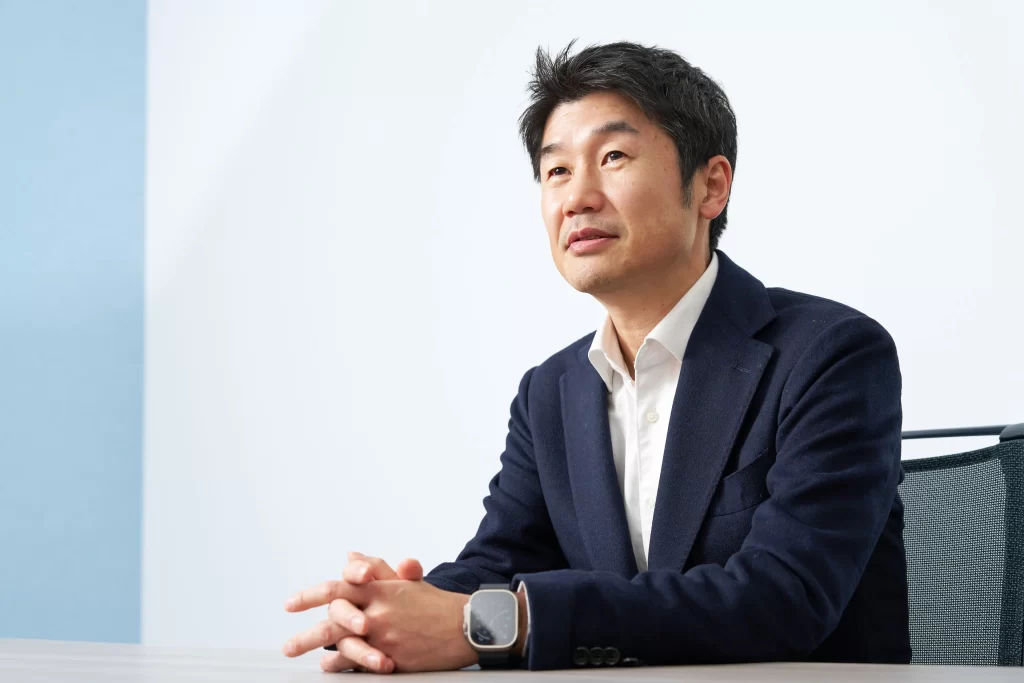
—In practical terms, what will change, and what will remain the same?
As announced during the program, the official YouTube channels and X accounts will continue. We will not stop providing information in each language.
What will change is how we think about which channels should provide what information, and to whom. Until now, this was largely determined by the regional group to which the participating talents belonged. Going forward, our starting point will be the language in which audiences want to receive information.
Valuing communities rooted in particular regions and expanding beyond regional boundaries are not mutually exclusive goals. Fans are already enjoying hololive across borders—English-speaking viewers watch Japanese-language streams, while viewers in other regions follow Indonesian-language content.
Our goal is certainly not to reduce our activities outside Japan. Under the single hololive name, we want to expand opportunities for talents and broaden the ways our content reaches people across languages and regions.
—Even so, people’s concerns may not disappear immediately.
I agree. There will undoubtedly be moments when people encounter something different from the format they know and cherish, and it would be insincere for us to say that nothing will change.
At the same time, it would not feel entirely accurate to describe this simply as “change.” This announcement is part of a process, not the final result. It is not about an ending, but about moving forward.
We can only share so much at this stage, so stay tuned to talent streams, future editions of hololive Next, and other upcoming initiatives as more details become available.
We want to show you the talents you support taking on bigger challenges in more places than ever before.
And together with all of you, we want to shape what comes next for hololive.
What We Will Show in the Year Leading Up to the 10th Anniversary
—Finally, what do you hope to demonstrate over the coming year as hololive approaches its 10th anniversary?
We now have less than one year to go until the 10th anniversary.
The name “hololive Next” represents our ambitions as we move into the next decade of hololive. It is the name of the program, but we also want it to express where hololive is headed over the course of this coming year.
—Could you tell us more about what “Next” means?
The first meaning is growth. We will carry forward the themes of “challenge” and “growth” established by DEV_IS and embrace them across hololive as a whole.
The second is evolution. We want to create more places and opportunities for talents to thrive, regardless of region or language. This is what we most want to make tangible over the coming year.
The third is the next generation. We will welcome a new unit and ask its members to carry forward what their predecessors have built. On top of the foundation created over the past nine years, we will build the next 10.
—Is that also why you chose to begin sharing information in the form of a program?
Yes. Rather than just posting a notice of what has been decided, I wanted to explain in my own words why we reached certain decisions. That is why we chose this format for the announcement. As we approach the 10th anniversary, we will continue to share new projects, information, and other developments that fans can look forward to.
—To close, do you have a message for everyone?
We released a lot of information all at once in this latest episode of hololive Next. Some of it may have confused viewers, so we will reflect on how our messaging is coming across and make improvements for the next iteration.
What matters more than the contents of our announcement is what will come from these changes in the future. We hope to show you, step by step, the achievements of our talents, content that reaches audiences across languages and regions, and an ever-expanding range of possibilities for their activities.
The newly unified hololive, and hololive production as a whole, has been built together with our talents and everyone who supports them. We will continue to communicate what will change, and what must not change, as we move toward what comes “Next.”
Toward the next 10 years—and a future we will shape together.
Thank you, as always, for your continued support.