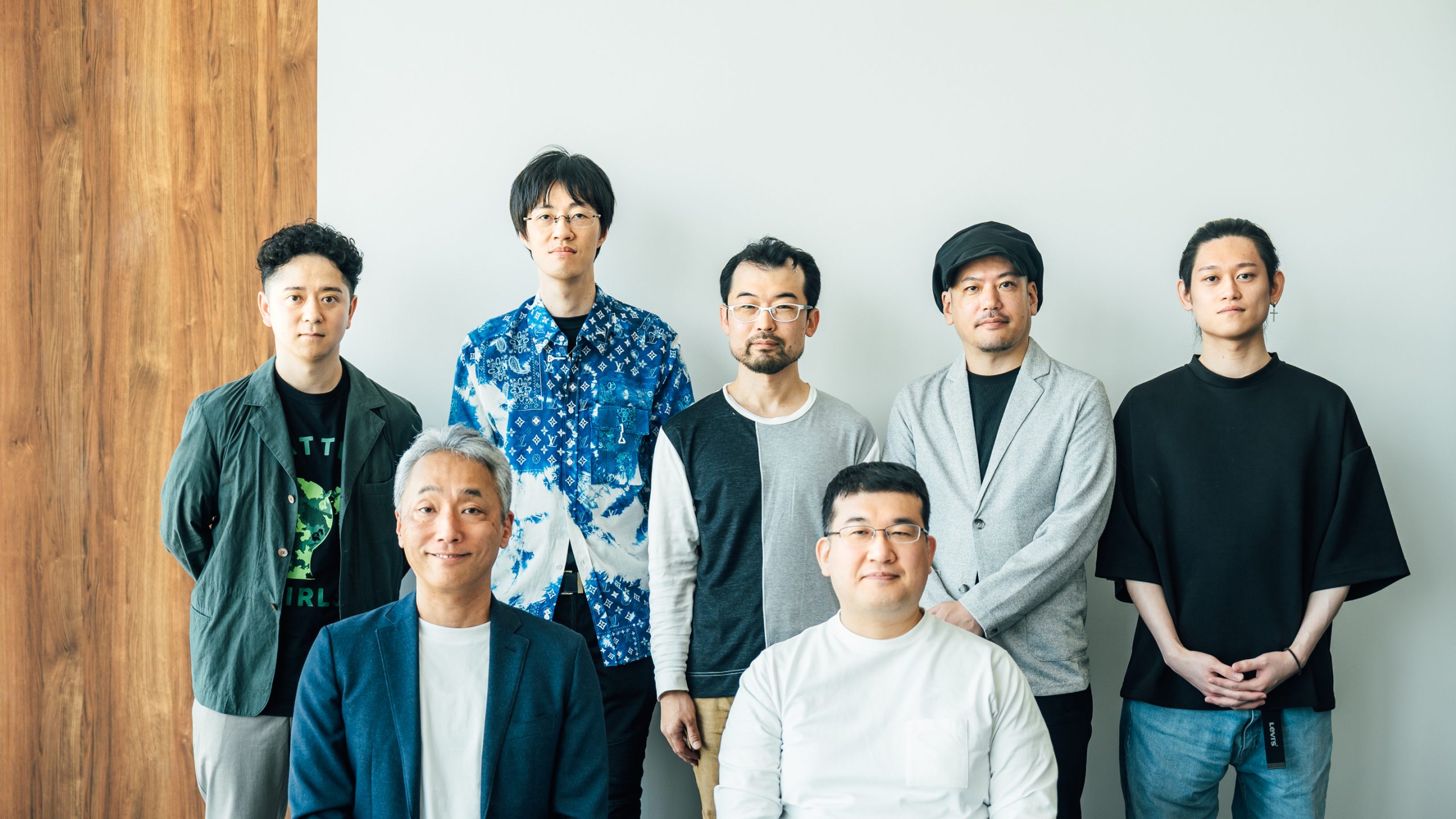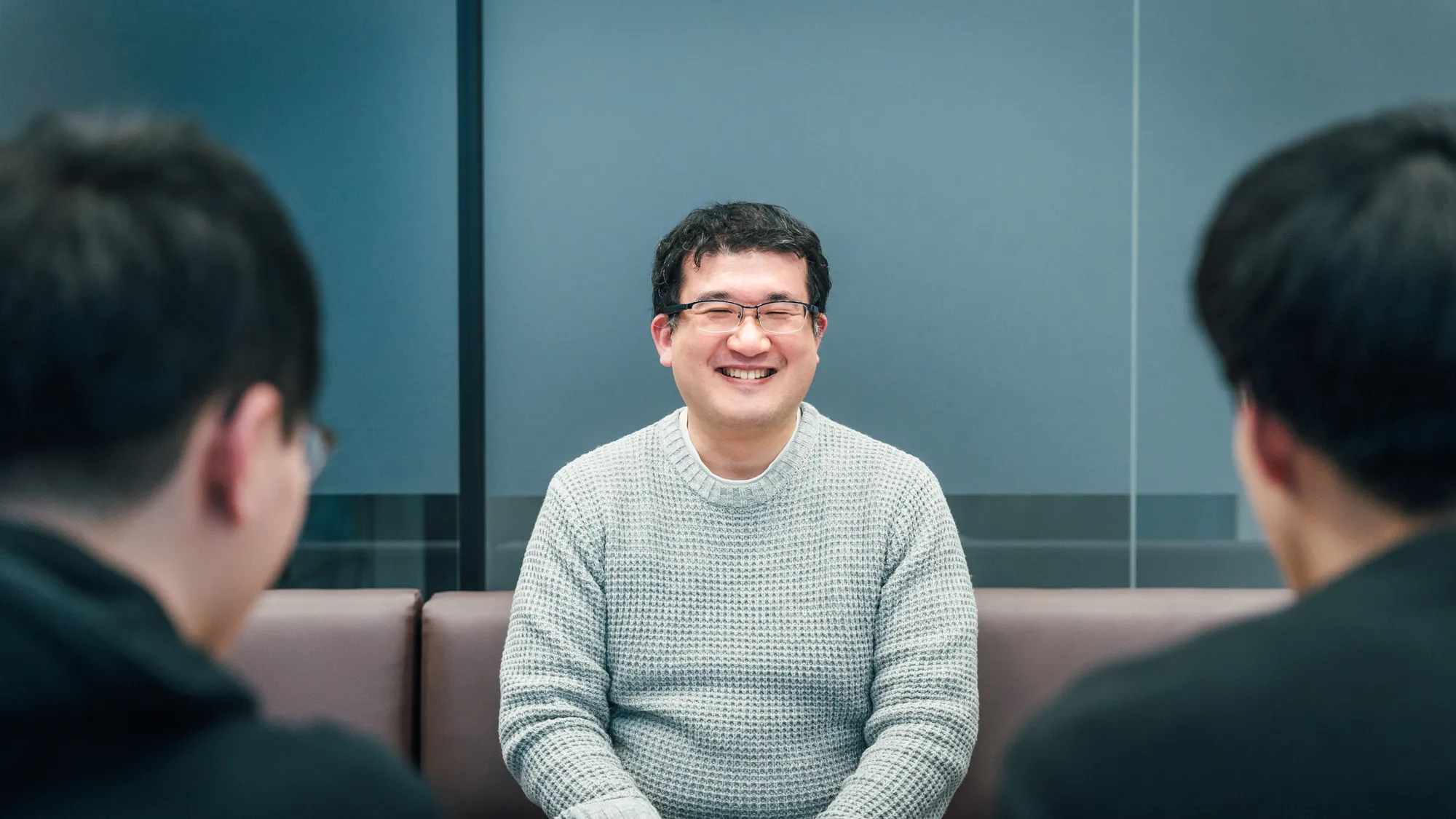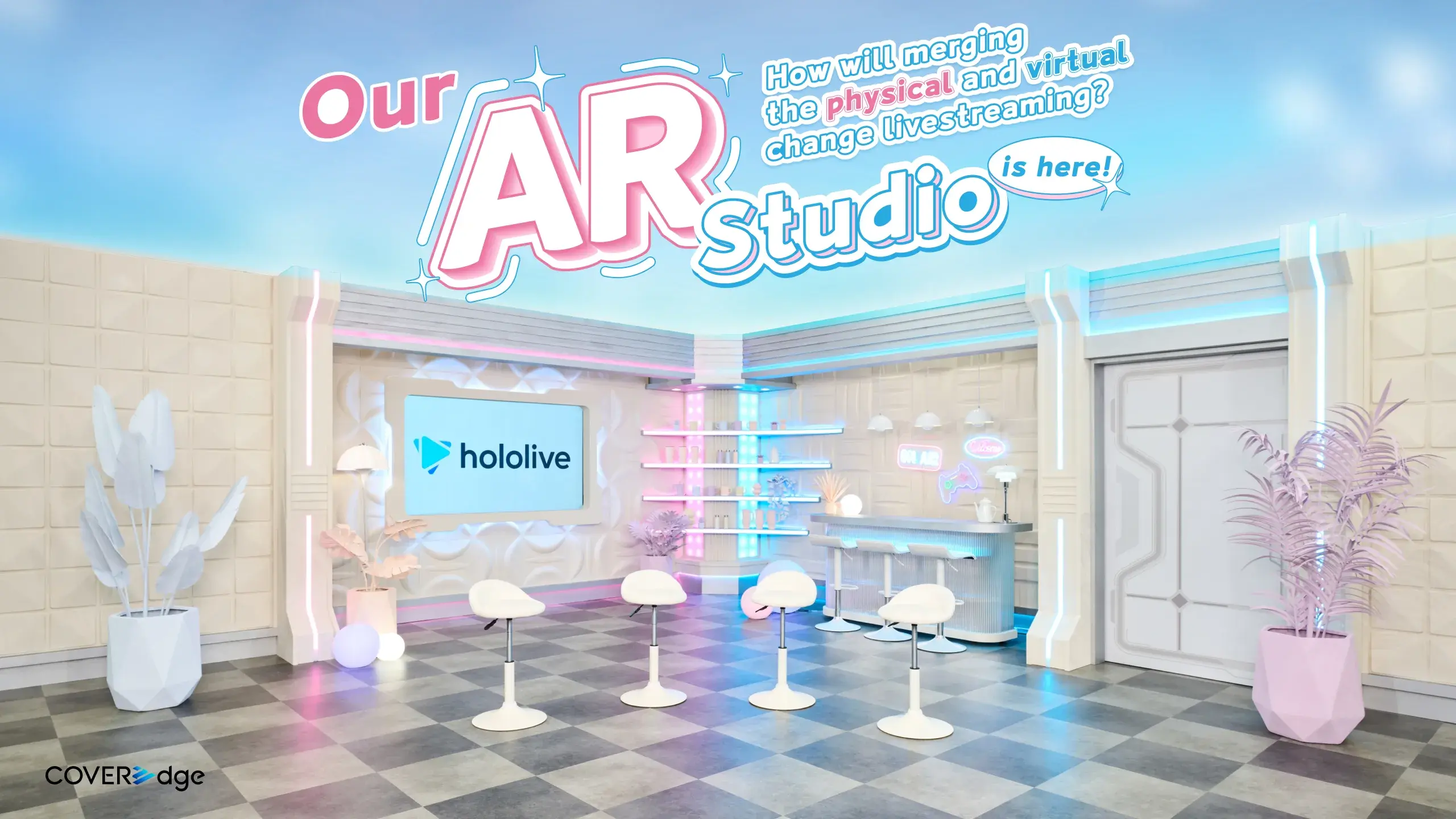
The latest episode of “hololive Next,” broadcast on November 20, 2026, announced the launch of COVER’s new AR studio, which fuses physical spaces with computer graphics to make recording and streaming videos that look as if talents are actually there in person possible. In this article, we spoke with studio operations and AR streaming staff involved in the launch of this new frontier to learn what led to the opening of this new studio and what kinds of streams the company will be able to deliver moving forward.
Equipped with a TV-Show-Style Set
――The fall of 2026 saw the official opening of COVER’s new AR studio, allowing the company to livestream its talents using a real-world set, and enabling the production of more realistic content, but what does it include?
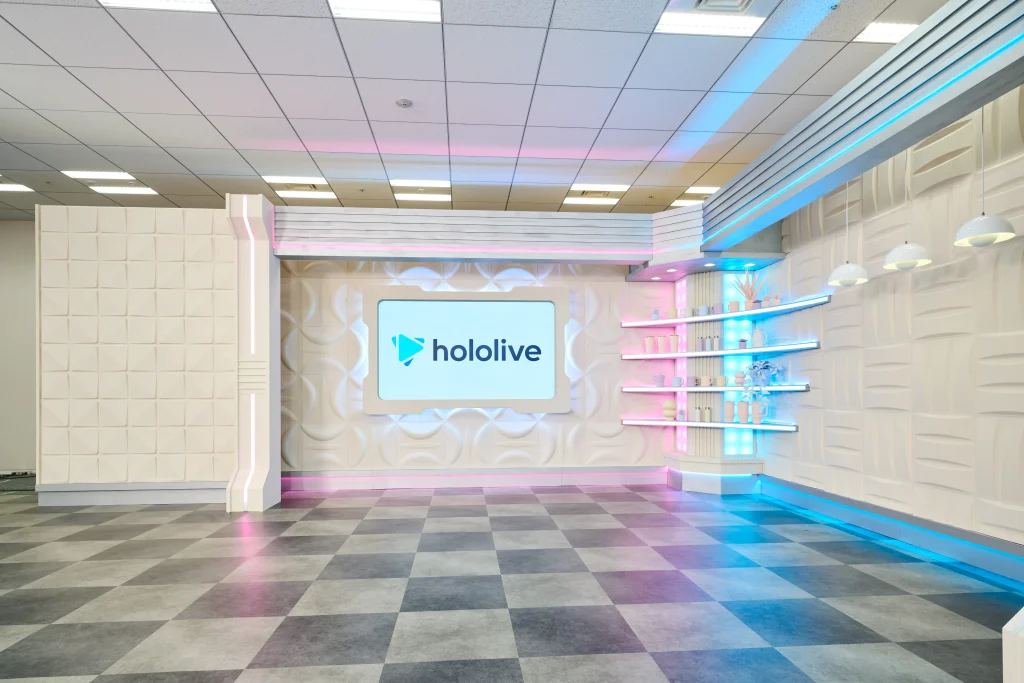
The studio is approximately 70 square meters, and we typically shoot using three cameras. Designed to allow remote-controlled cameras and other equipment to be added depending on the project, it is suitable for shoots with around five people in total, including both real-life guests and talents. Although over six people appeared in the November 20 episode of hololive Next, the studio is built to accommodate five people when balanced well, including real-life participants and talents, so the number of participants and direction will vary depending on the production.
――What are the lighting and set like?
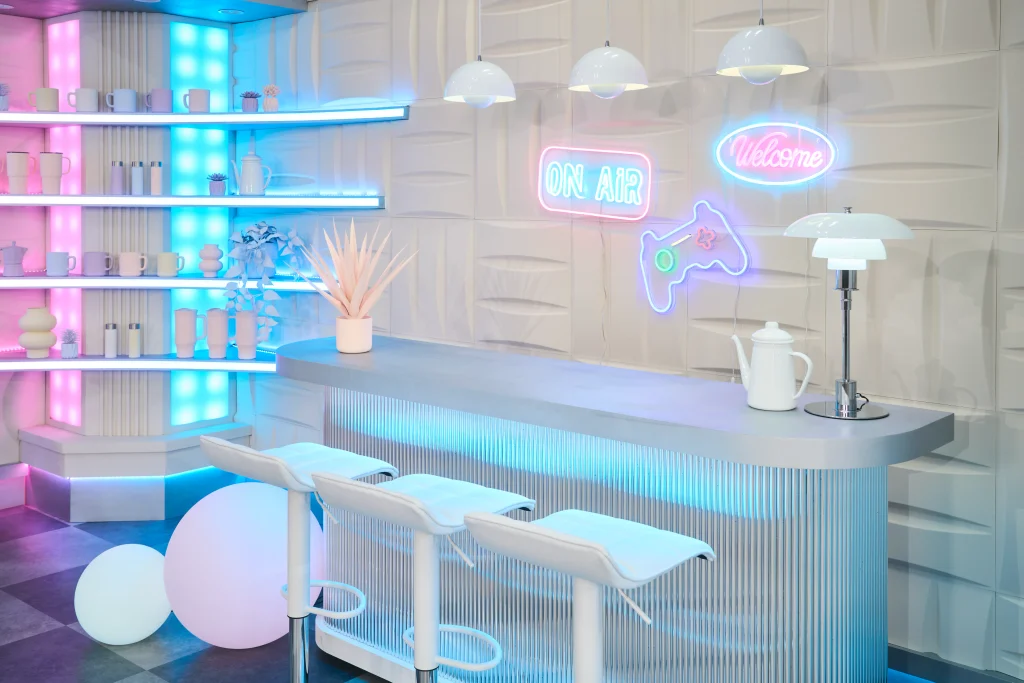
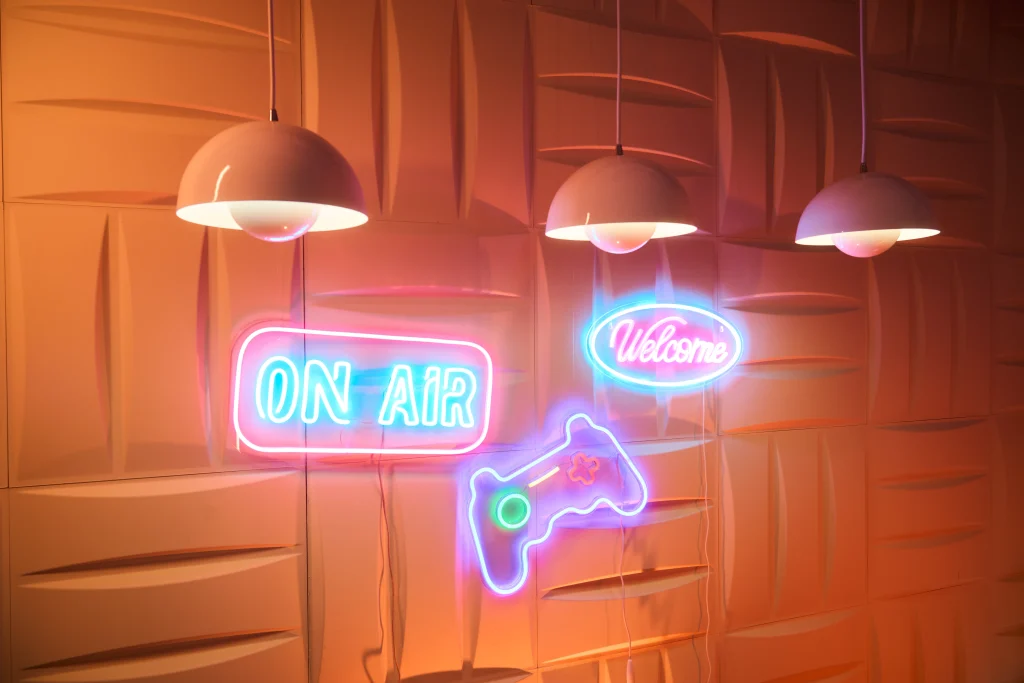
The studio includes ten lights, along with some additional decorative lights and downlights. We also plan to add more lights to enhance the visual effects for events like mini live performances.
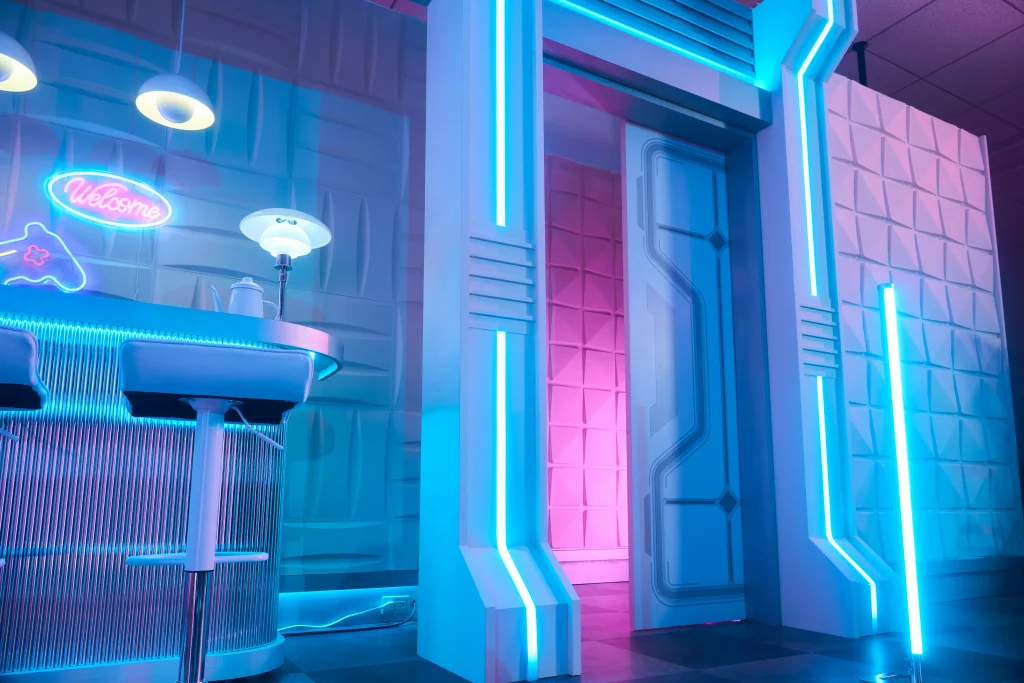
A company specializing in TV station set design was commissioned to create the set. Designed around the concept of a “café inside a spaceship,” it features a cute, colorful design that complements hololive talents very nicely.
We also plan to decorate the standard set with some talent merchandise, such as plushies and acrylic stands, and on top of this, create a production style similar to that of morning shows or TV news programs by setting up a monitor and playing a video while the talents chat. Although the physical set has no ceiling, we have created a 3D ceiling for streams; another way we are blending the real and virtual worlds even more seamlessly.
――What kind of technology is used for recording and streaming at this studio?
With a state-of-the-art AR tracking system, we can now shoot without complicated setups that can typically take a whole day to get ready. This system also gives us greater freedom in our camerawork, allowing us to easily shoot from angles that were previously difficult to achieve with AR filming, and as adjustments take significantly less time, we believe it also helps reduce the burden on our talents.
User-Friendly App Developed In-House for Frequent Streaming
――Could you tell us what led to the decision to open the AR studio?
It all started with a collaboration video we streamed two years ago. At the time, we were already thinking that we could do a much wider range of collaborations if we had a dedicated AR studio, but traditionally, when talents appear with real-life guests, we have had to film them against a green background (green screen), and composite the video to replace the green background with the desired image. This not only required post-production editing but also limited the camerawork we could do. We realized that a dedicated AR studio would give talents greater freedom when performing with real-life guests and to expand the range of possible production styles and movements.
――So you had been considering developing an AR studio for two years?
Back then, 3D livestreams using markers attached to performers’ bodies to track their movements were mainstream, so we focused on enhancing video quality to accentuate our talents’ charm using motion capture and streaming technology in our 3D studio. While researching AR technology, we put off adopting such methods because we were concerned it would be technically difficult to use for everyday streams at the time.
In 2025, however, we became aware that equipment capable of markerless tracking would become available, and by around February 2026, after researching and testing the technology, we were able to move forward with a plan to open an AR studio. From there, we accelerated our plans and successfully launched the studio.
――Which divisions/teams were involved in the studio launch?
Various teams were involved, including the Sound Team, the Lighting Team, the Filming Team, and the Studio Maintenance Team from the Livestream Technology Division. The General Affairs Division also helped us comply with the Fire Service Act and coordinate with the building management company when we installed the equipment and set.
Additionally, the Technology Development Division integrated capabilities into the app we normally use for 3D streaming, enabling us to composite and stream AR content. Since we were building an AR studio, we wanted to stream AR content on a regular basis, at least once a month. To make that happen, we needed a system that was easy to operate. Instead of creating a new app exclusively for AR streams, which wouldn’t be versatile, we asked the division to enhance our existing 3D streaming app so that it could also be used for AR streaming in the same way. The division also updated our graphics environment to ensure our talents’ models would be AR-compatible.
――What is the difference between streams from the 3D studio and those from the AR studio?
Previously, when our talents appeared with real-life guests on stream, we invited the guests into a virtual space; now that we have this new AR studio, VTubers can step into a real-world space, creating greater freedom of movement and expression.
For example, our green-screen filming method limited the area we could shoot in and the camera work available to us, and it also required considerable post-production editing depending on the content. The AR studio now gives the talents significantly more freedom of movement, including moving closer to guests or making eye contact with them. It also allows for staging, where the talents climb steps or make an entrance by opening a door. Part of the appeal of AR streams is that viewers can watch the talents and guests move and interact naturally.
I believe videos shot in a real-world studio will be more accessible even to people watching a hololive Production video for the first time.
――What do you do to make the video look as if the talents and guests are performing together naturally?
一For example, if we turn the lights in the studio red, we adjust the lighting in real time to ensure that red light is cast on the talents as well. We also make other adjustments such as matching the color tones of the guests and talents, so that the whole video looks natural.
Collaboration with a Wider Variety of Guests Now Possible
――What kind of streams would you like to deliver from the AR studio in the future?
We hope to create streams that make the most of AR’s strengths. For example, AR enables us to hold live acoustic performances where our talents sing along to a real-life guitarist playing live. Even when introducing merchandise, we previously had to display product images while the talents were talking about them, but with AR streams, we can show the actual items on screen while they introduce them.
In this way, we can expand the range of what we can do in our streams. We want the talents to actively invite real-life guests they wanted to collaborate with but couldn’t before. These are only some of our ideas, but we could have a freestyle rap battle between a real-life rapper and a hololive talent, or have the talents play card or board games while displaying actual cards and boards on the screen. We’d like to take on new projects like these. By tailoring our expression to each project concept, we want to take on a variety of new challenges. It might not be possible right away, but we also hope to do cooking streams in the future. Wouldn’t it be nice to boil toshikoshi soba during a year-end stream? The possibilities are endless (laughs).
――Could you tell us about your future prospects for the AR studio?
There are still very few facilities capable of AR filming today. Against this backdrop, we have built a dedicated AR studio, which has provided us with an environment where we can accumulate expertise in AR filming. I believe that is a huge step forward.
As our experience in AR filming and streaming grows, we may also be able to consider drawing upon learnings and expertise we gain in our on-location shoots. For example, we could prepare for talent TV appearances in a short time if we choose to conduct them via AR streaming, or we could bring equipment into a dance lesson studio to stream their dance practice sessions. We may be able to do on-location shoots like these on a daily basis down the road.
By expanding streaming options—including not only high-quality, large-scale special streams, but also “self-booth 3D,” which allows for easy 3D streaming, and AR streams that blend the real and virtual worlds—we hope to continue enhancing our streaming environment to enable the talents to stream more freely in a wider range of situations.