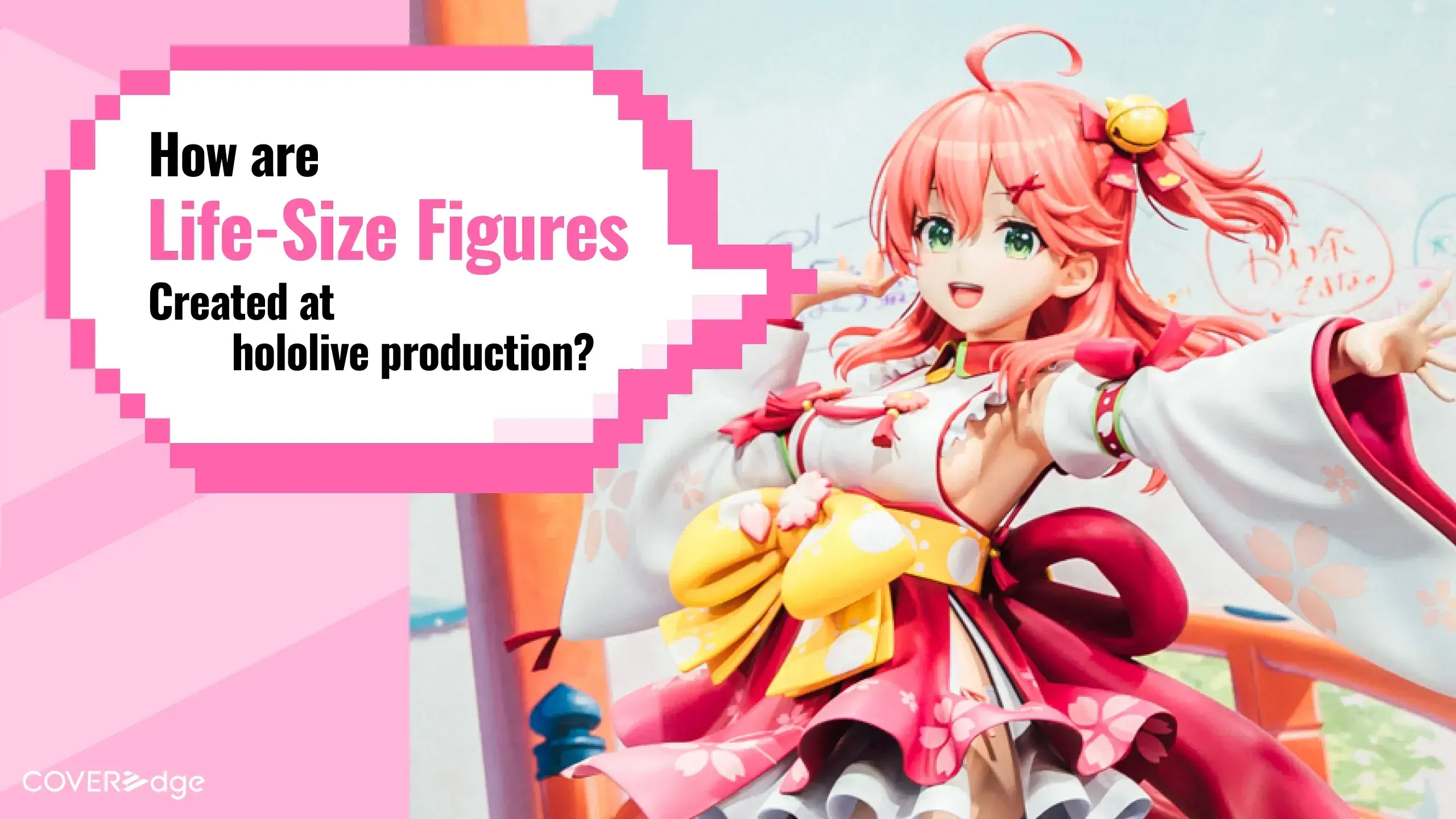
hololive SUPER EXPO 2026, held from March 6 to 8 at Makuhari Messe, saw the reveal of a life-size figure of hololive production talent Sakura Miko!
This was also not the first time a life-size figure has appeared at a COVER event, but in fact one of many, and on every such occasion, it has been Design COCO ltd. that has taken on the task of producing high-quality figures.
In this article, we will look back at the history of figures planned and produced via the collaborative efforts of Design COCO and COVER, and give you a behind-the-scenes look at the production process behind the Sakura Miko figure. We explore the meticulous craftsmanship and unique appeal involved in transforming VTuber talents into life-size figures.
The history of life-size figure projects at COVER
The first time COVER and Design COCO produced a life-size figure together was in 2022, when they came together to make a figure of hololive English’s alumni, Gawr Gura. Exhibited at hololive SUPER EXPO 2022, the figure garnered much attention for how beautiful its molding was and the cuteness of its pose.
Following this were the two life-size figures of Fuwawa Abyssgard and Mococo Abyssgard, displayed between April and May 2025 at SHIBUYA TSUTAYA, Tokyo.
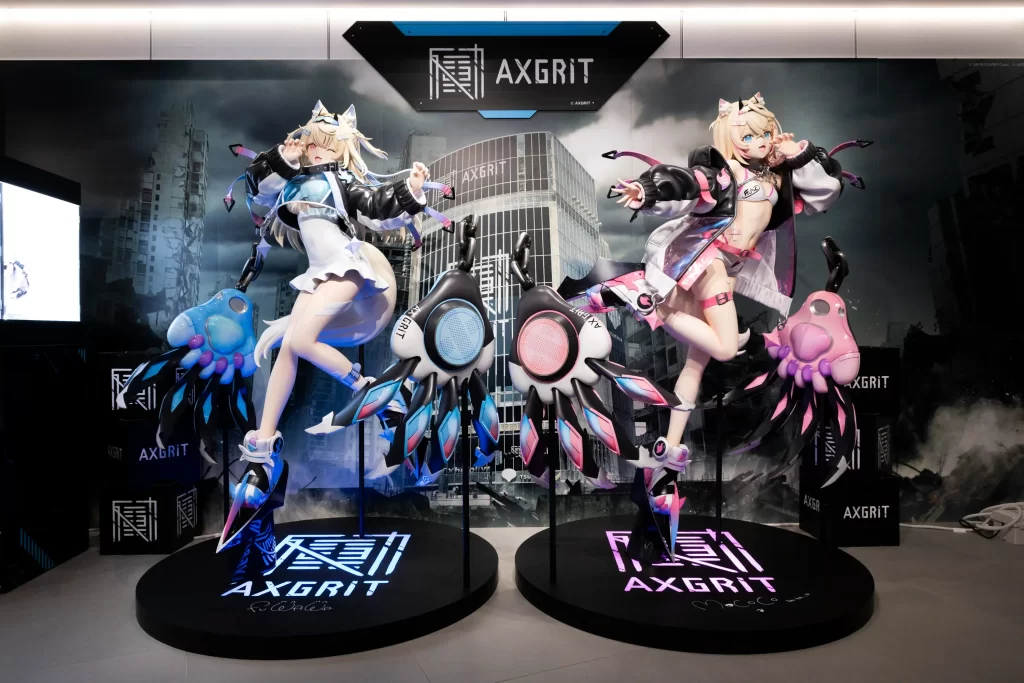
They were created to commemorate the launch of AXGRIT, a new project celebrating the first anniversary of SHIBUYA TSUTAYA’s reopening, featuring original AXGRIT costumes and attached units. The difference in their expressions, their dynamic poses, and the fluffiness of their ears and tails were all perfect!
Reference article:
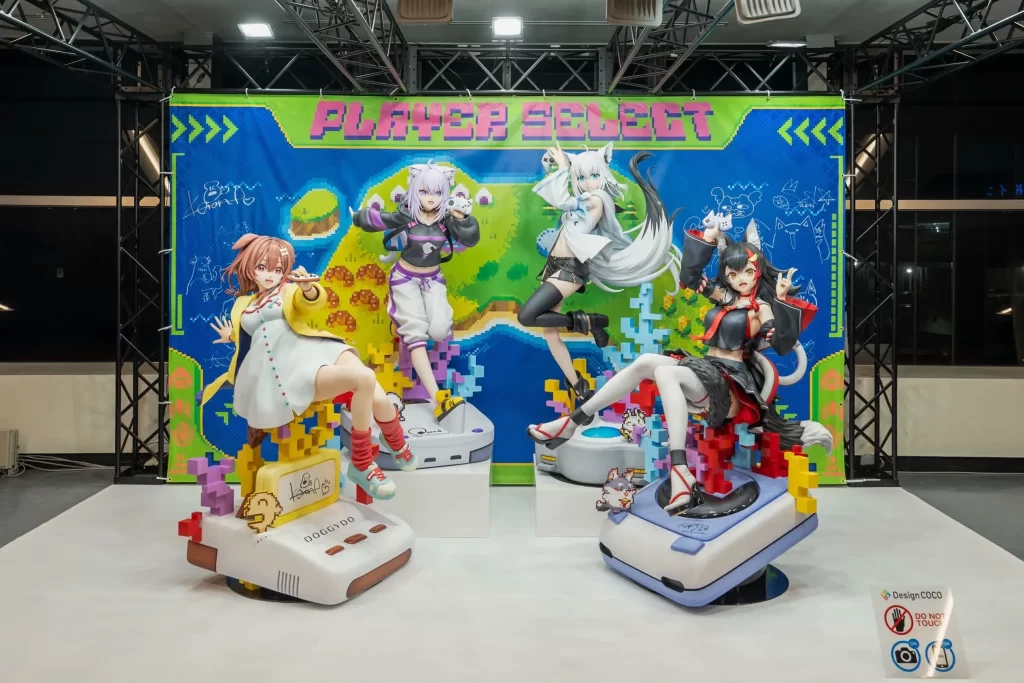
Since then, there have been a total of more than 10 life-size figures produced by Design COCO, including those of Usada Pekora, Hoshimachi Suisei, Houshou Marine, and the hololive GAMERS (Shirakami Fubuki, Ookami Mio, Nekomata Okayu, and Inugami Korone): all very cute, all of the highest quality.

These figures have featured at many locations, including events, live shows, and even the entrance hall of the company office.
How Ordan’s illustration became a life-size Sakura Miko figure
In this segment, we will provide an insight into the production process of the Sakura Miko figure exhibited at the latest hololive SUPER EXPO.
The planning process began in the summer of 2025.
Currently, it is COVER’s Licensing Division, part of the Merchandising Department, that is in charge of planning and coordinating life-size figures. These figures are primarily planned and produced to coincide with key moments for the talents and hololive production, such as pop-up events and live shows.
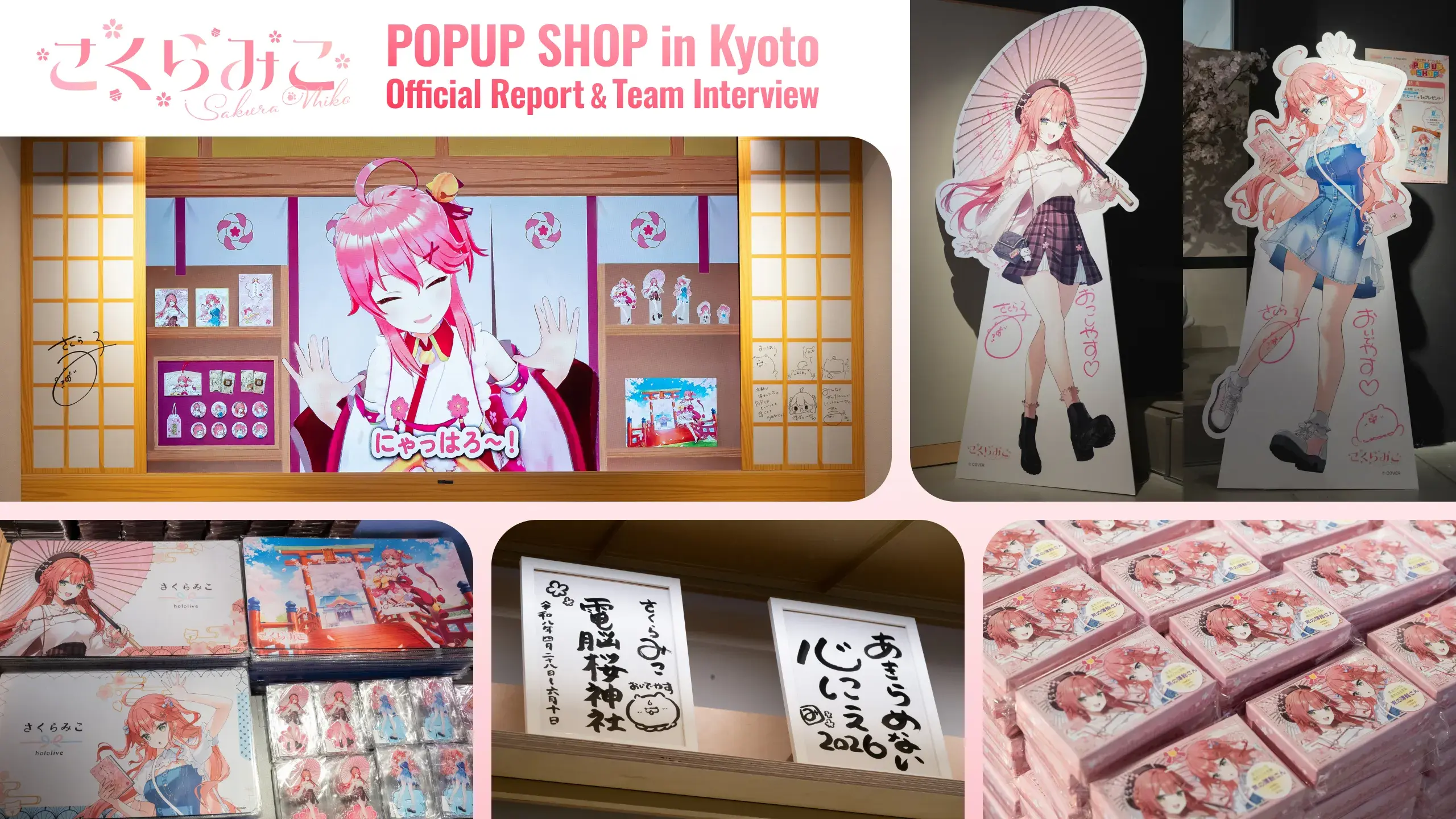
The Sakura Miko figure was created to align with the opening of the Sakura Miko POP UP SHOP (starting April 28, 2026), which will commemorate the opening of the Kyoto TSUTAYA IP Bookstore, with details unveiled during Sakura Miko’s birthday celebration, streamed on March 5, 2026.
While the life-size figure itself is not for sale, a 1/7 scale figure featuring the same pose and outfit is also being produced, which will be available for fans to purchase.
When turning a talent into a figure, the first necessary element is the initial illustration. Existing illustrations can be used for reference in some cases, while in others, a brand-new one is commissioned. This time, the illustration was handled by popular artist Ordan, well known for having worked on numerous hololive illustrations and outfits, who created all-new original artwork for this project.
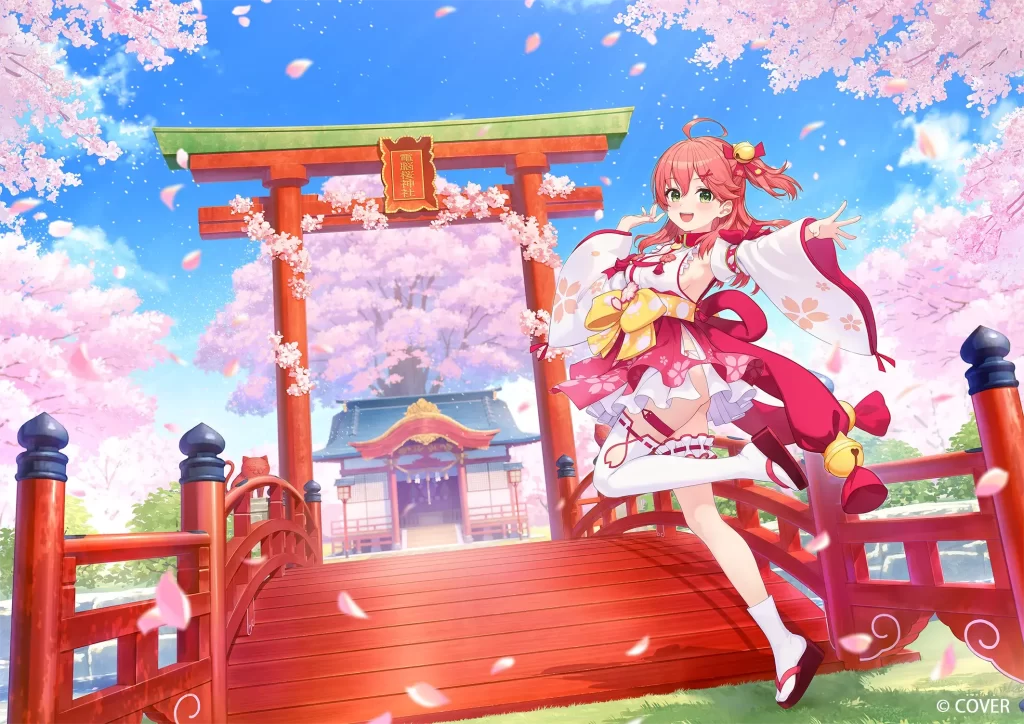
On a vivid, red-painted Japanese-style bridge, Sakura Miko wears a gentle smile. The sleeves and hem of her outfit, fluttering in the wind, are breathtakingly beautiful. Recreating them in a three-dimensional figure, however, posed a formidable challenge.
The production process can be broadly divided into three stages: 3D data, prototype, and painting. Let’s take a closer look at what happens in each stage.
Creating 3D data and prototypes through repeated test builds and reviews
The first step is converting the original illustration into 3D data. Design COCO’s 3D CG team builds the 3D model from scratch, beginning by creating a rough human silhouette, then gradually refining the finer details, such as the facial mold, the flow of the hair, and the outfit.
Once the 3D data has been completed, COVER’s Licensing Division reviews it, and Design COCO revises it based on any feedback. This back-and-forth is repeated several times until the 3D data is finalized.
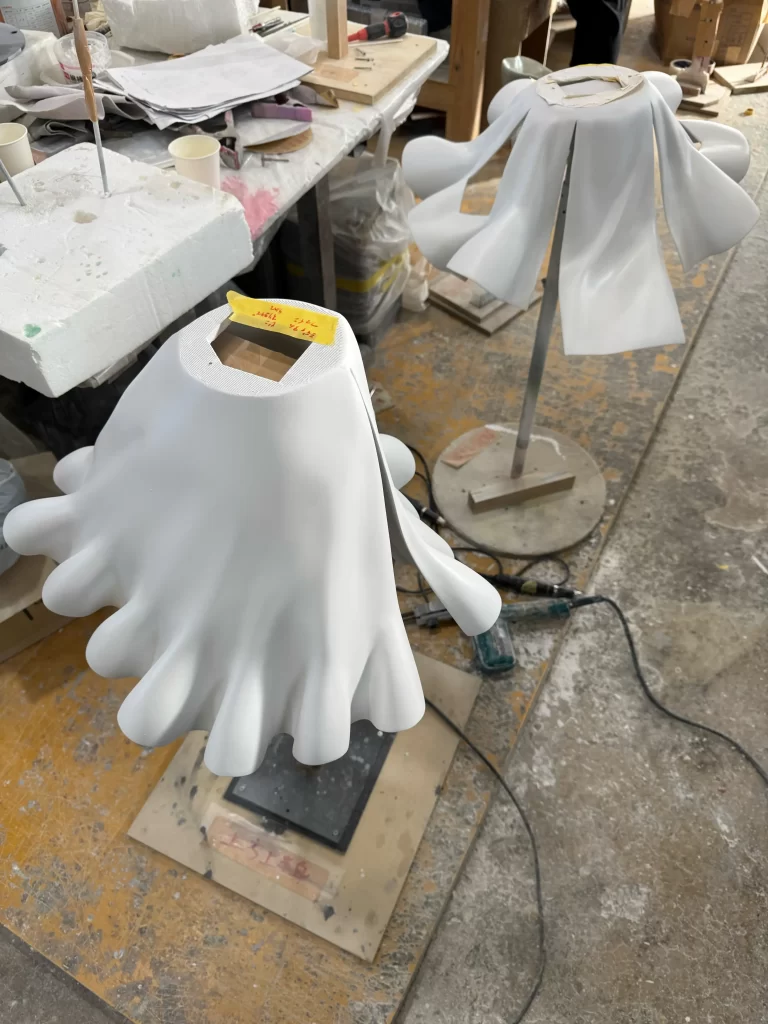
The second step is then taking the data and producing a prototype using a 3D printer. However, even if the data looks perfectly natural on a monitor, turning it into a physical, three-dimensional object can reveal subtle inconsistencies, off by just a few millimeters. Here as well, the prototype is reviewed multiple times, and adjustments are made so that even the smallest details feel accurate.
Here is the assembled prototype. Everything except her eyes is unpainted, yet it is already clearly recognizable as Mikochi.
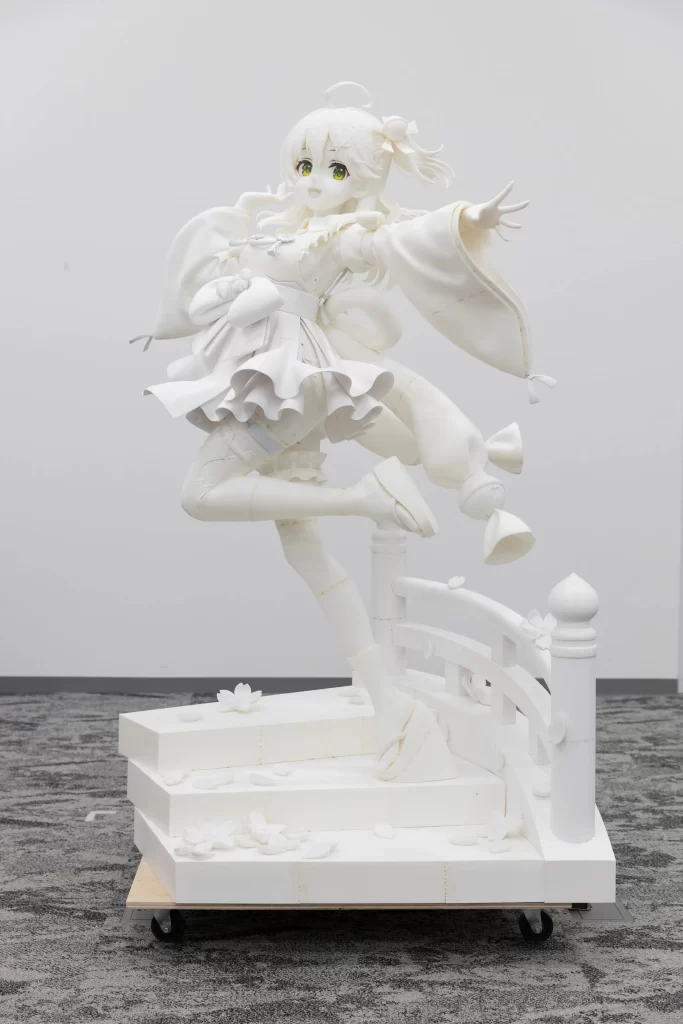
Incidentally, just like scale figures, life-size figures are also constructed by assembling individual parts to form the full three-dimensional model. After assembly, which took roughly 30 minutes, the prototype was transported from Design COCO’s studio in Sendai, Miyagi, to COVER’s headquarters in Tokyo, where both companies conducted joint reviews.Multiple members from Design COCO and COVER’s review teams examined each part one by one, cross-checking it against the original illustration and the master style guide to ensure there were no mistakes or oddities. They inspected it not only from the front, but from the sides, behind, and every other angle, meticulously checking not only the standing pose and the finer details of the outfit, but also the bridge serving as the base and the cherry blossom petals swirling around the figure.
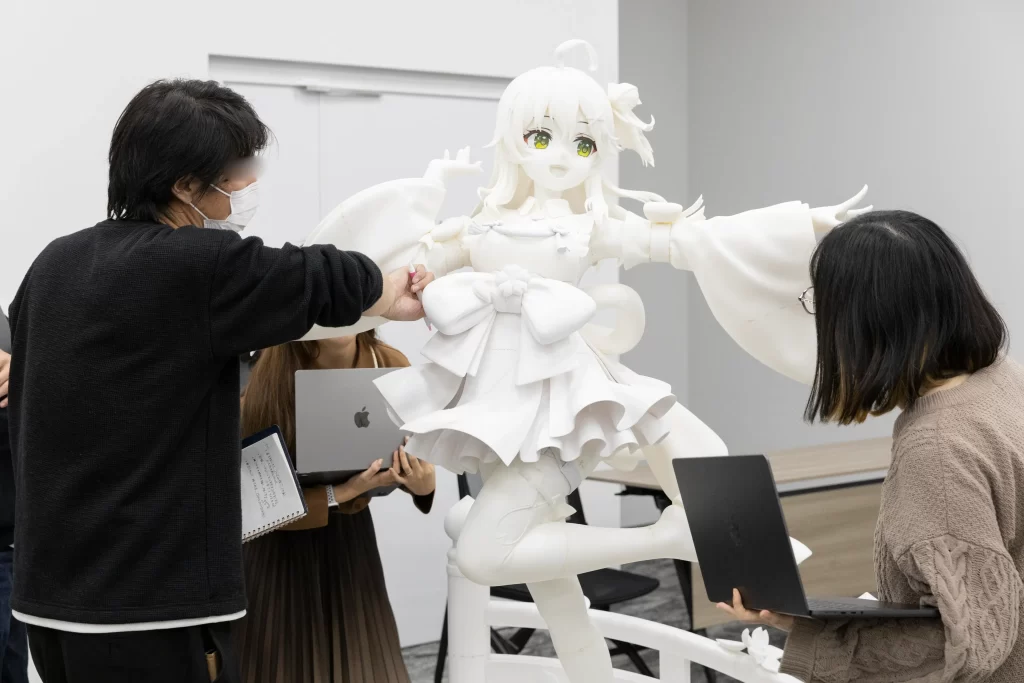
Further modifications were then made to the prototype based on the feedback from this review.
Painting that captures the finest lighting and fabric textures
Once the prototype is complete, the next step is painting, in which color is applied.
During the painting stage as well, what matters most is attaining the most natural look in 3D.
For example, even if an outfit is just one shade of pink, the intensity of the pink differs in areas hit by light and those in shadow. There are also areas where the hue appears different depending on the texture of the fabric or how it overlaps with the skin. To realistically reproduce these nuances, Design COCO’s painting team reportedly blends dozens of colors to create the final tones before applying them.
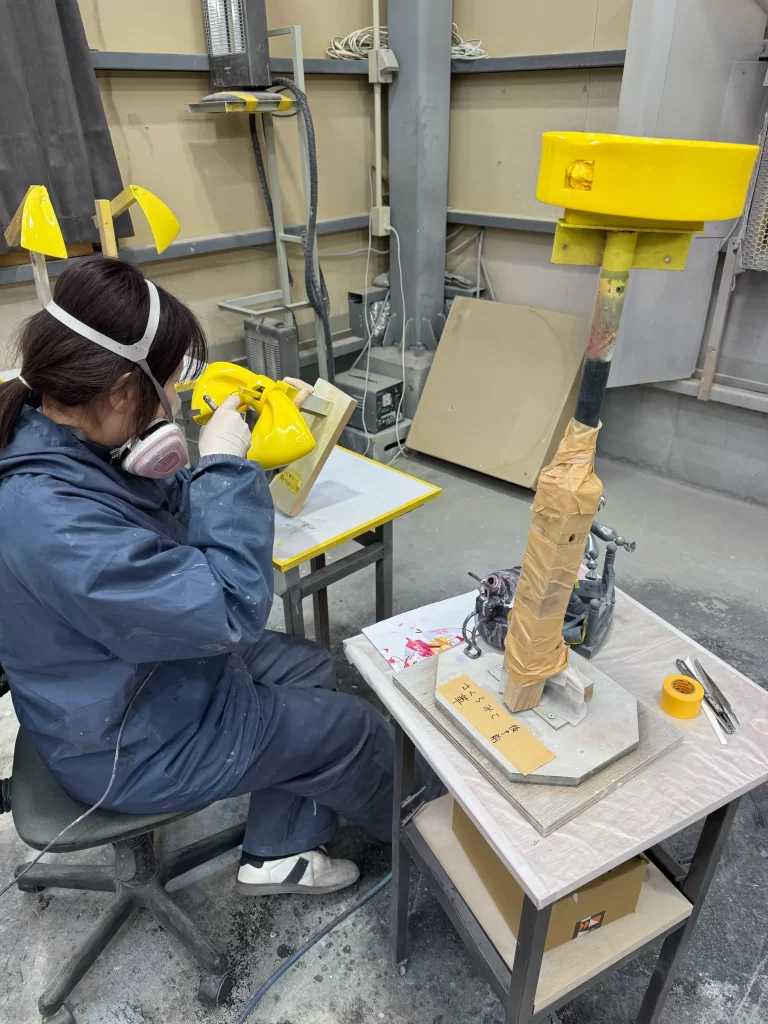
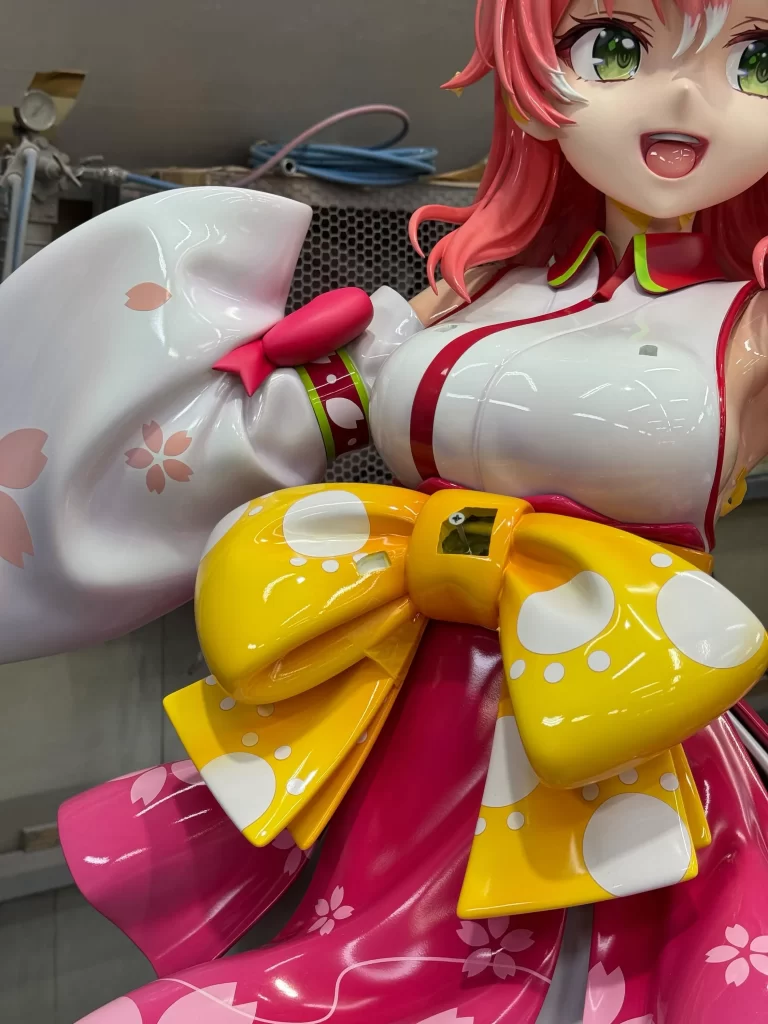
Just like the previous ones, the Sakura Miko figure arrived from Design COCO in Miyagi, painted and disassembled, and was put together by the team at COVER.
Here is the fully assembled figure: now it is undeniably Mikochi!
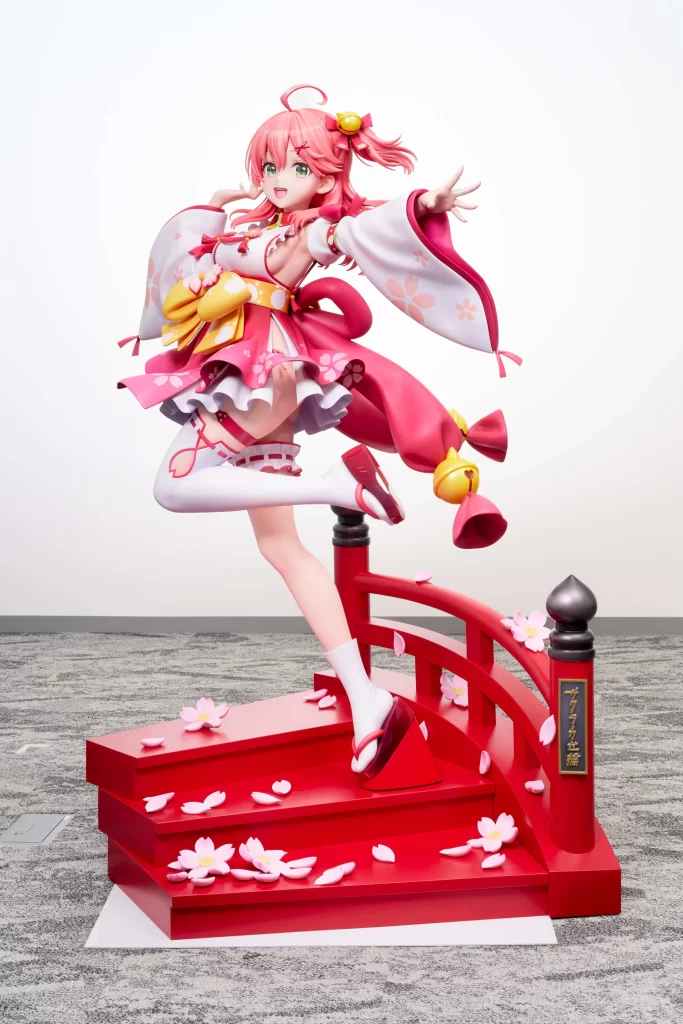
To the untrained eye, it may already look finished, but as with the prototype, both companies conduct rigorous inspections after final assembly as well.
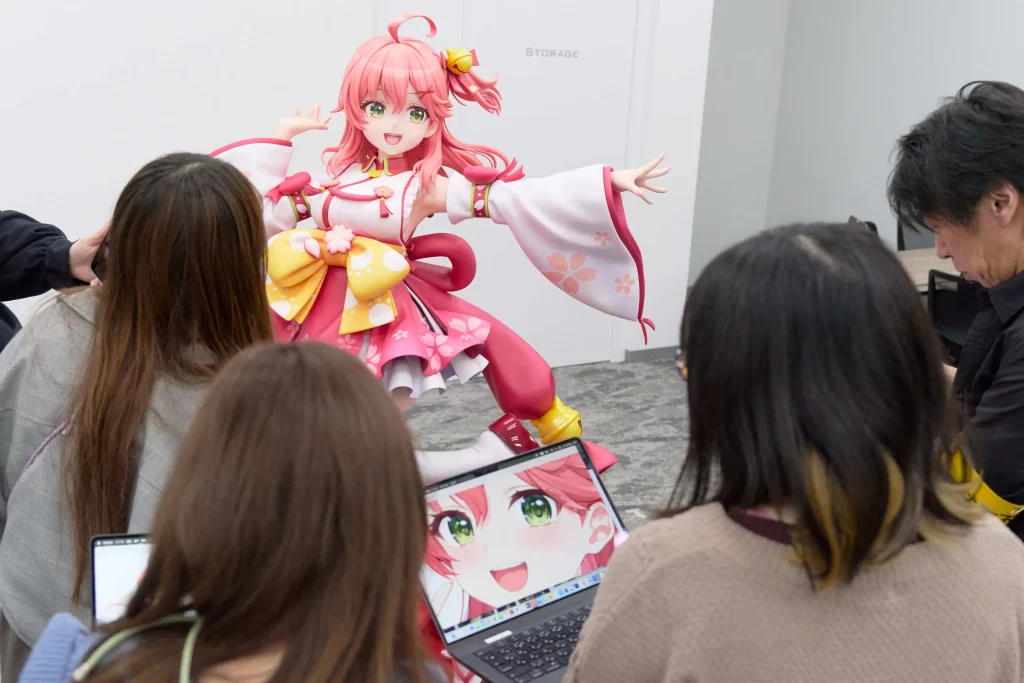
In particular, this time around, there were extensive discussions regarding the direction and size of her irises, as well as their depth. While carefully referencing the original illustration, the teams determined how it should be revised.
Generally, one or two of these in-person group reviews are conducted during each stage of the production process, but even between those sessions, COVER and Design COCO are in constant communication, exchanging emails and phone calls repeatedly: creating the figure through detailed discussions and meticulous coordination.
Once all these stages have been completed, the figure of Sakura Miko, looking truly beautiful, dancing atop a bridge amid swirling cherry blossom petals, is now ready to be unveiled at EXPO!
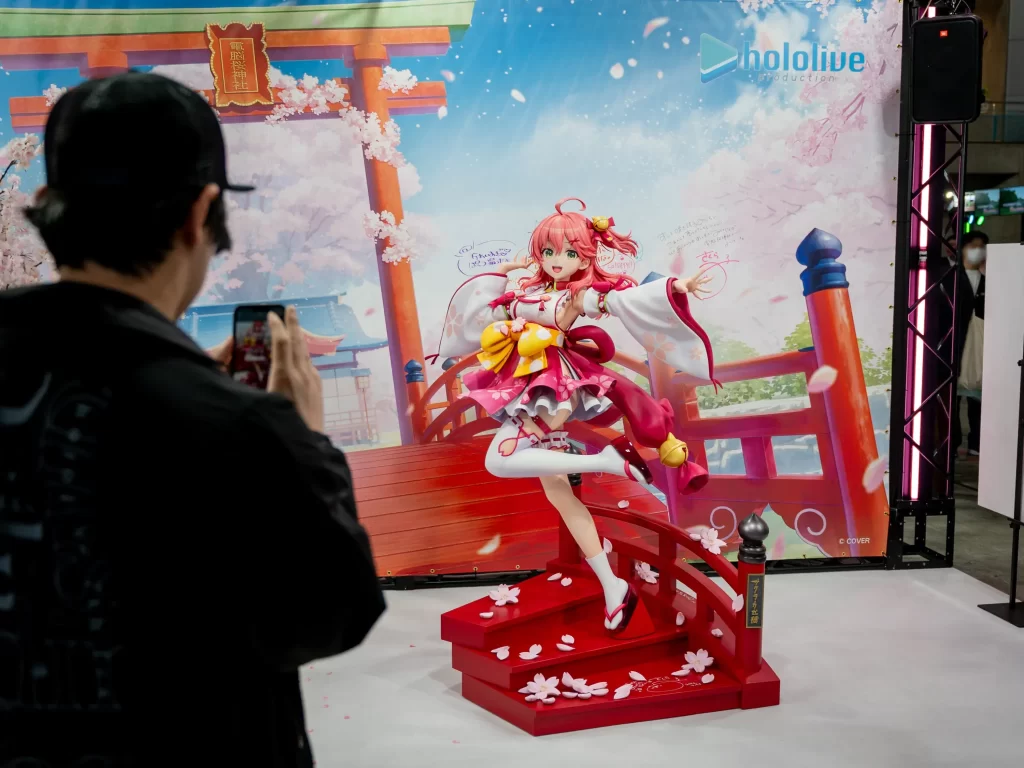
This life-size figure is a one-of-a-kind, but a smaller 1/7 scale figure will be released for a limited time!
For more details, please check the official hololive production shop as well as Design COCO’s online shop, COCO STORE, and other participating outlets.
Be sure to welcome her into your room!
Unexpected attention to detail, driven by artisanship: An interview with the creators
Let’s now hear directly from the people involved for a behind-the-scenes look at the creation of the Sakura Miko life-size figure. Production was handled by Design COCO Director Senga and Creative Director Sakai, along with Matsuda from COVER’s Licensing Division, Division 1 Team.
When asked what they were most particular about during production, Matsuda was the first to respond with simply, “The face.”
Matsuda: Even the smallest deviation of just a few millimeters when it comes to facial features can create a completely different impression. With the eyes as well, if the direction of the gaze, the irises, or the pupils shift by even fractions of a millimeter, the eyes won’t align with those of onlookers.
Sakai: For us, too, the painting of the eyes is what we tend to focus and spend the most time on. Aside from that, we were also conscious of making sure the primary pink color was as close to the original illustration as possible. Also, for the gold parts on the hair ornament and outfit, we didn’t simply apply a standard gold paint: we painted them using our own interpretation of ‘gold’ that matched the overall feeling of the illustration.
You can really feel the respect and love for the talent. They went on to say that they take particular attention during the sculpting stage to overlapping areas so that the body and the outfit don’t look like they are fused together.
They also talked about considerations unique to producing 1/7 scale figures.
Senga: With the life-size figure, a major challenge is packing in details. We have to divide colors very finely to reproduce light and shadow so it doesn’t look flat, and craft the flow of the hair with precision. As the 1/7 scale figure is much smaller, even a 0.1 millimeter shift can drastically change the impression the face gives off, or cause the paint to bleed. And if the mold is too intricate, it may not translate well during mass production at the factory, or cause defects. Both are difficult and rewarding in their own way.
Matsuda: That’s right. Especially since figures are mass-produced largely by hand, they are also products in which maintaining consistent quality is tricky.
The one thing we absolutely must avoid when producing figures is the situation Ozeki mentioned in a previous interview―”a gap in quality between the photos shown at the time of pre-order (the painted sample) and the product that actually arrives.” There are, unfortunately, real-world cases where the quality of the final product is lacking, leaving fans disappointed.
Our job is to deliver something amazing and highly valuable to fans.
That’s why we include our final step: investing significant time and effort in reviewing test units prior to mass production. It is this part of the process that gives us the confidence to deliver a quality product to fans. We feel that this is our mission.
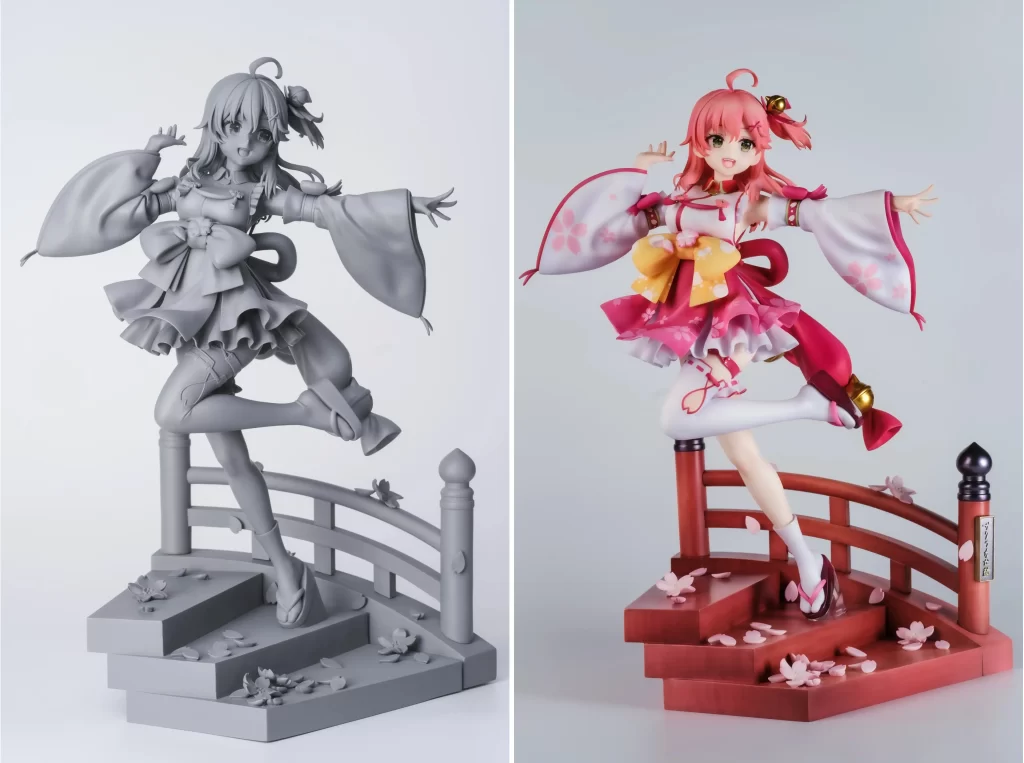
Senga also shared an anecdote about the finer details of the life-size figure.
Senga: This time, the base is a red wooden Japanese-style bridge. Normally, the base is made from the same kind of material as the figure itself, so at first, we discussed making this bridge from the same material and then attaching plywood over the top to make it look like a wooden bridge. However, we actually have an employee who used to be a furniture craftsman at a previous job, and as they worked on it, their craftsperson’s spirit seemed to start burning (laughs), so they decided to make the bridge out of real wood!
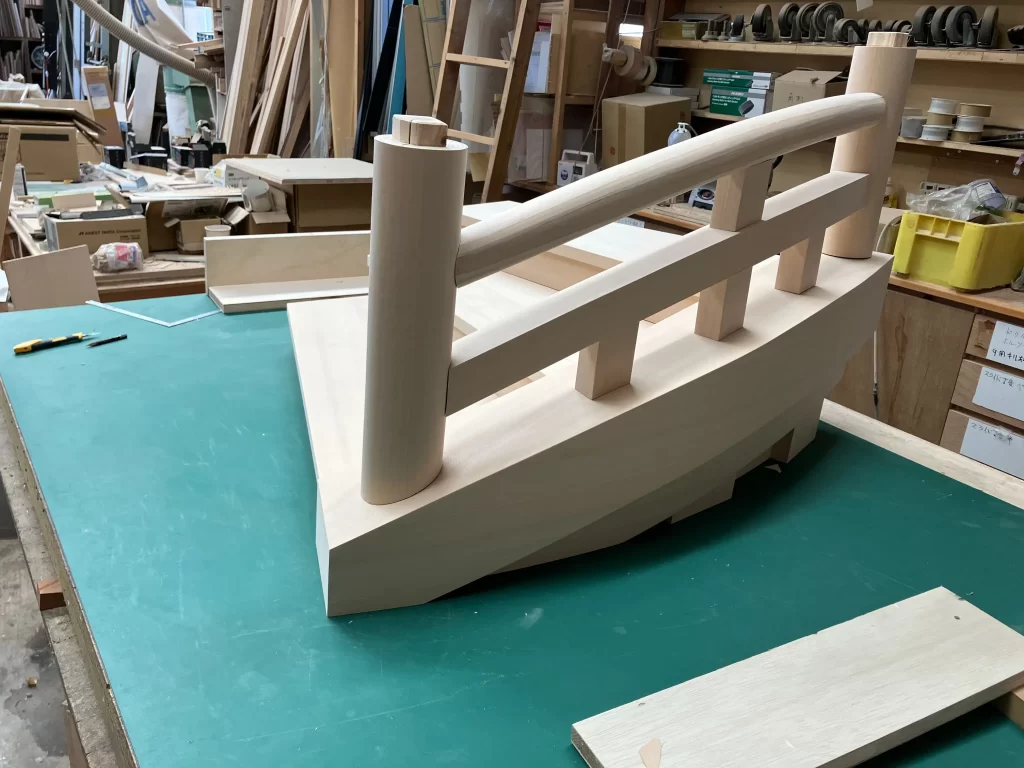
If you have the chance to see the life-size figure at a pop-up shop or elsewhere in the future, be sure to check out the material of the base as well!
“We are happy when not only fans are pleased, but the talent themselves are delighted.”―The rewards of figure production
Everyone involved pours their passion into figure-making every day, but what do they find rewarding about their work?
Senga: When we exhibit a life-size figure at an event, fans line up to come and see it. Some people even write extremely detailed impressions of our figures on social media, and seeing those reactions fills me with such joy and gives me a sense of fulfillment.
Sakai: When I see fans taking photos of the figure, it feels like all the effort has paid off. It also makes me incredibly happy when we get a reaction from the talent themselves. Them saying things like “It’s so cute” on stream makes me smile from ear to ear while watching (laughs).
Senga: Seeing the inspiration behind a figure happy with their figure is something unique to VTubers. We also produce figures for anime and manga, but obviously, we can’t get any reactions from those characters. We have many hololive fans among our employees, so when the talent gives a positive reaction, the whole company celebrates, and it makes us even more motivated to make the next one even better.
Matsuda also commented from the perspective of a COVER employee.
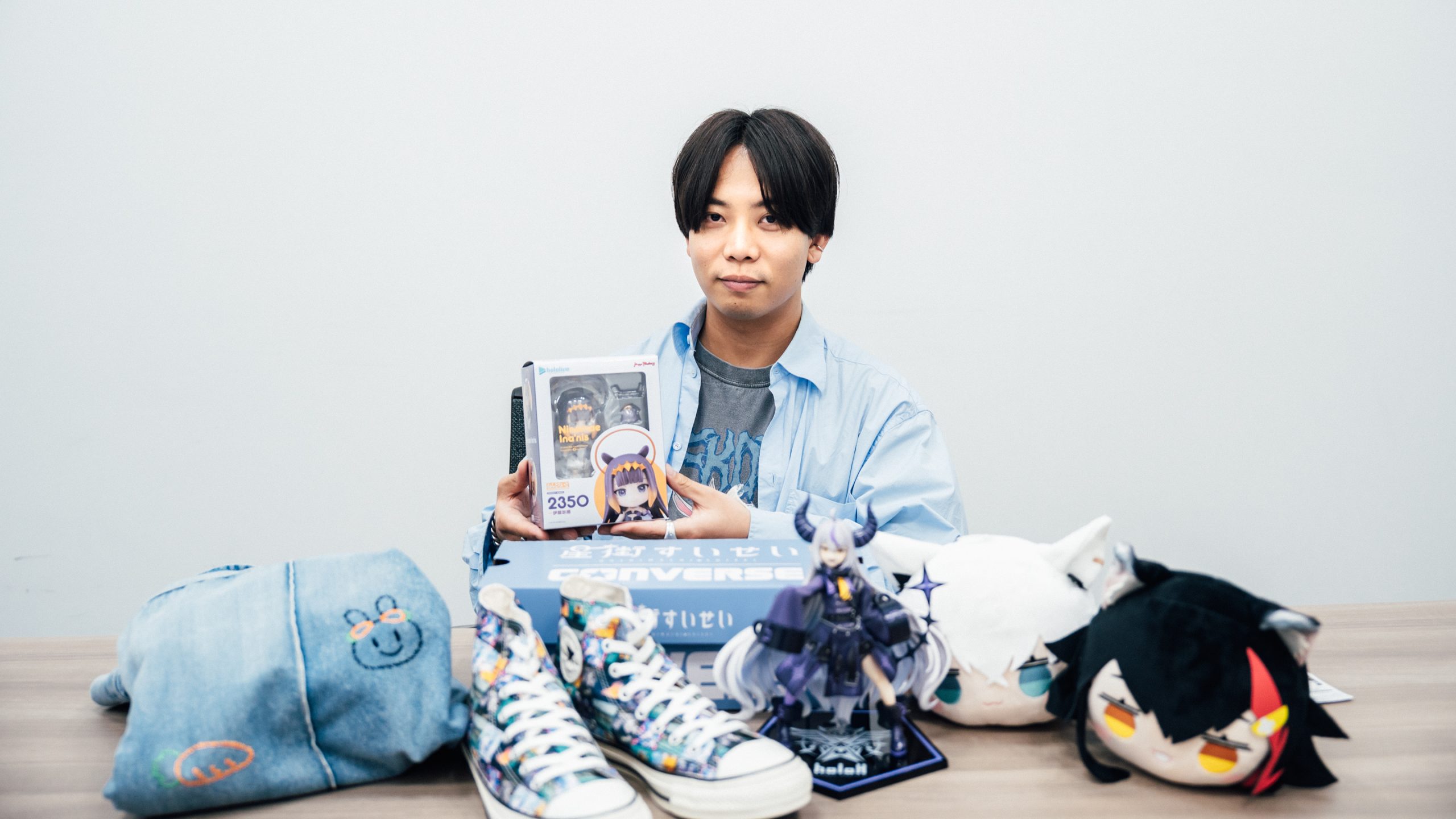
Matsuda: I personally love figures, too. I have a collection of over 100 at home, including large statues and scale figures. From that love comes a great passion, which I want to draw upon to create even higher-quality figures and use them to convey the appeal of hololive production to many more people.
I’ve experienced this myself, but the charm figures have isn’t something you can explain with logic. Someone might happen to see a figure in town that moves them, leading to their discovery of hololive, and it would be my honor if something I have created with my own hands were the reason for such a wonderful encounter.
Going forward, I want to keep delivering captivating figures that also serve as a gateway into the world of hololive production.
Thank you for reading about the world of figure production, which connects hololive talents who exist in the virtual realm to our everyday lives in a way other than through streaming technology. We look forward to seeing even more life-size figures in the physical world soon!
[Sakura Miko Pop Up Shop Information]
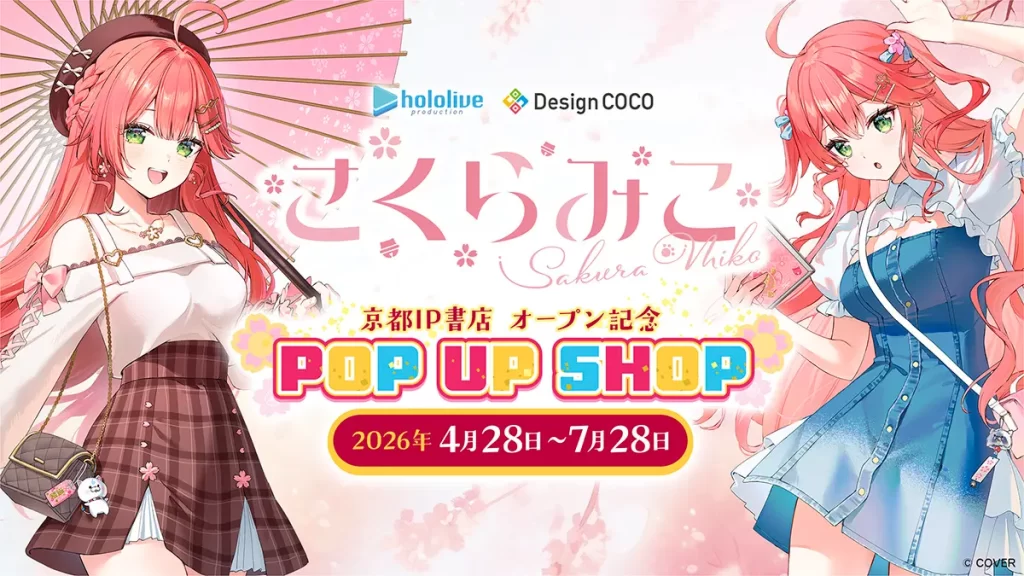
Period: April 28 (Tue) – July 28 (Tue), 2026
Venue: Kyoto IP Bookstore
Details:https://tsutaya.tsite.jp/articles/store-5166 (available in Japanese only)
Related Article: